
Your Treatment Journey Made Clear
Sometime before the day of the procedure, at the consultation, whether it’s in person or via telephone, we will review your medical history and determine if any of the medications you’re currently taking need to be discontinued temporarily. These usually include any of the anti-inflammatory medications, such as aspirin or ibuprofen, but it can also include several supplements as well. We will also determine your primary as well as secondary areas of your body that you would like to receive injections. Additionally, we recommend a number of supplements that have recently been identified as being effective at increasing the number and efficiency of the stem cells we feel are of great value in taking before and after the injections. This optimizes results. We will go over this in detail.
On the day of the procedure, after checking in and answering any questions, we will repeat a physical examination and finalize which areas you want for the injections. Depending on which areas of the body that need injections, we may have you change into a surgical gown, although usually shorts or sweatpants and a T-shirt work well.
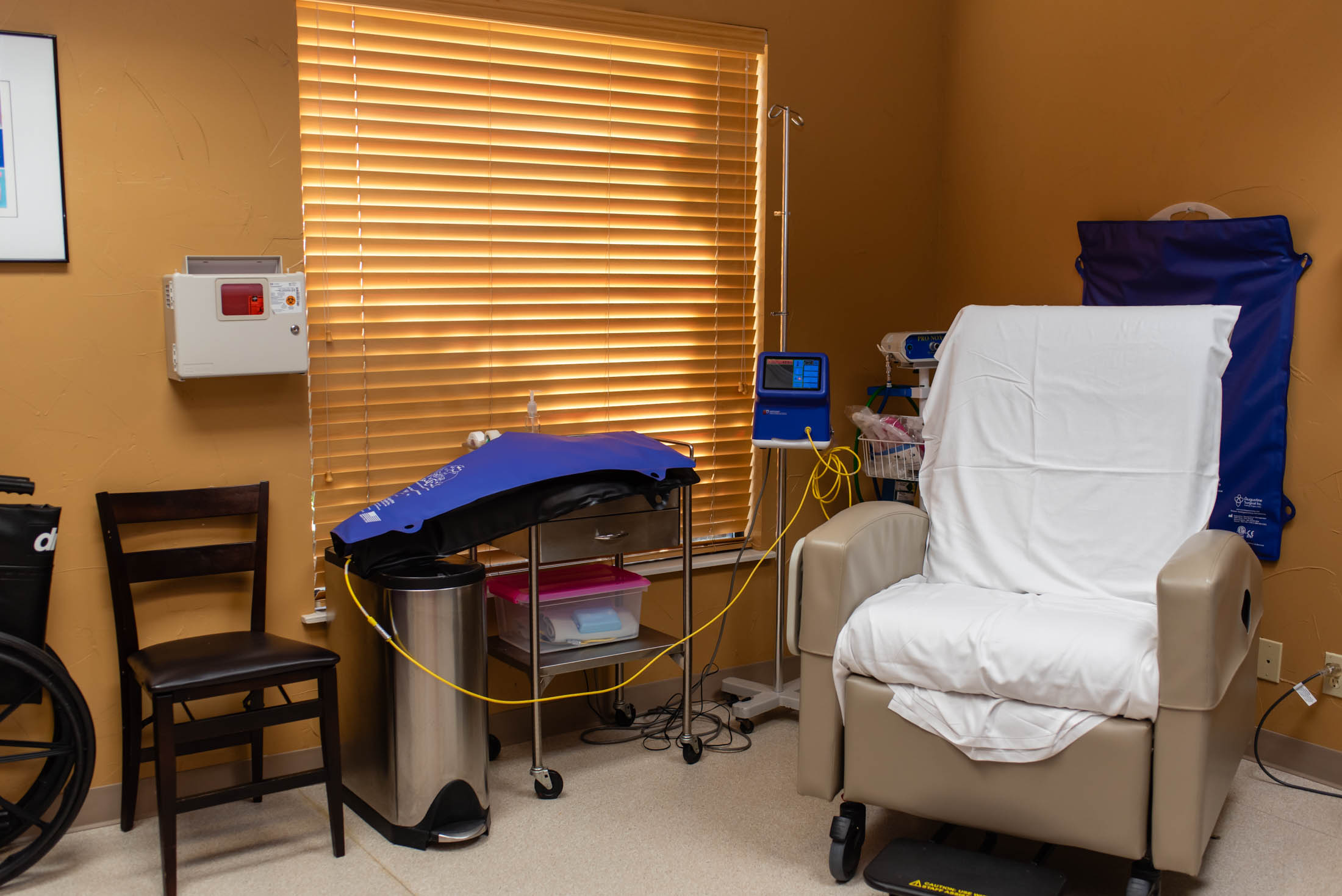
The actual procedure itself takes place within the operating room in the clinic. In total, it takes less than 30 minutes, depending on how many injections are needed. If local anesthetic combined with nitrous oxide gas was chosen by the patient, the first thing that will happen is local anesthetic will be used via a small needle to numb the skin over the area of the pelvis where the bone marrow will be aspirated. The patient will be instructed when to take deep breaths of the nitrous for comfort during the bone marrow aspiration. Once approximately 50 mL of bone marrow has been obtained, it is then processed through a special centrifuge, which typically takes about 13 to 15 minutes. This is followed by completing the injections and the procedure.
Most patients experience little or no discomfort during this procedure!
Also during the procedure, for patients who chose twilight anesthesia, which involves an intravenous sedative administered by an anesthesia physician, the procedure steps listed above are identical except local anesthetic and nitrous are not needed. The patient is given a choice about staying under anesthesia until all the injections are completed versus being awakened once the bone marrow has been aspirated. Twilight anesthesia is not general anesthesia and is quicker and very effective to keep you comfortable while you are being treated.
After the procedure is completed, the patient may immediately leave, unless twilight anesthesia was utilized. If not, the patient is cleared to drive on their own. They would otherwise need a ride home. The waterproof dressing covering the site of bone marrow aspiration along the side of their waist can be removed 24 hours after the procedure. The simple Band-Aids over the sites of the injections can be removed as soon as the patient gets home. Advice and recommendations on returning to sports and activities as well as jobs will be customized based on each specific person and their needs and goals. Additionally, an effective regiment of supplements as well as other modalities effective for stem cell health will be recommended. A very large percentage of people can expect a significant level of pain relief to begin as early as the morning after the procedure. That said, it can take as long as 4 to 6 weeks before maximal pain relief, regeneration and healing to occur. For athletes, a temporary and short rest from their sport may be recommended during this healing period.


 Loading...

 Reload document
  Open in new tab
 General Frequently Asked Questions

Stem cell therapy uses your body’s natural repair cells to help regenerate damaged tissues, reduce inflammation, and promote healing.
Stem Cell Therapy-Specific
Common conditions include joint pain, arthritis, tendon injuries, spinal issues, and degenerative conditions. We’ll assess your case individually during your consultation.

IV Therapy-Specific
IV therapy can boost energy, strengthen immunity, improve hydration, enhance recovery, reduce fatigue, and support skin and gut health.
Logistics + Payment
Most stem cell and IV therapies are not covered by insurance. We offer
competitive pricing and a variety of discounts.